Limit further entry
A temporary cover needs a usable attachment and a way to direct rain past the exposed area. The damaged roof and conditions determine whether that approach is suitable.
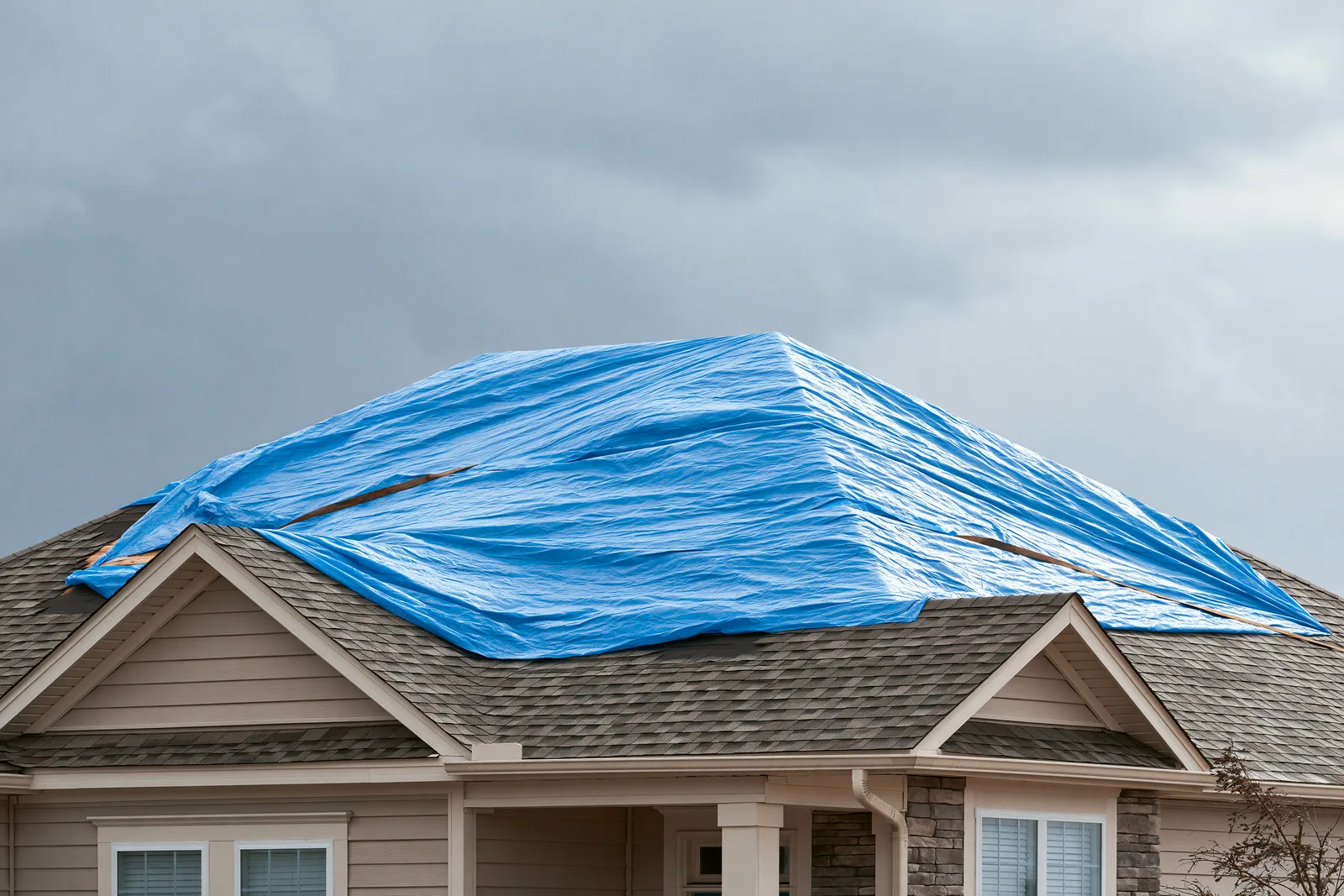
If water is coming in or the roof has an exposed opening, call and describe the immediate concern. Safe access, weather and the condition of the roof determine the practical work.
An active leak needs a clear description: where the property is, where water is appearing and whether material is loose or exposed. You do not need to identify the failed component.
Keep away from sagging ceilings, unstable debris and water near electrical fixtures. Stay off the roof and do not enter an unsafe area to take photographs. An immediate threat to people or electrical safety needs emergency assistance.
For the roof itself, the assessment considers whether temporary cover or stabilization can reduce further water entry before the permanent repair. Heavy weather or unsafe access can limit that work.
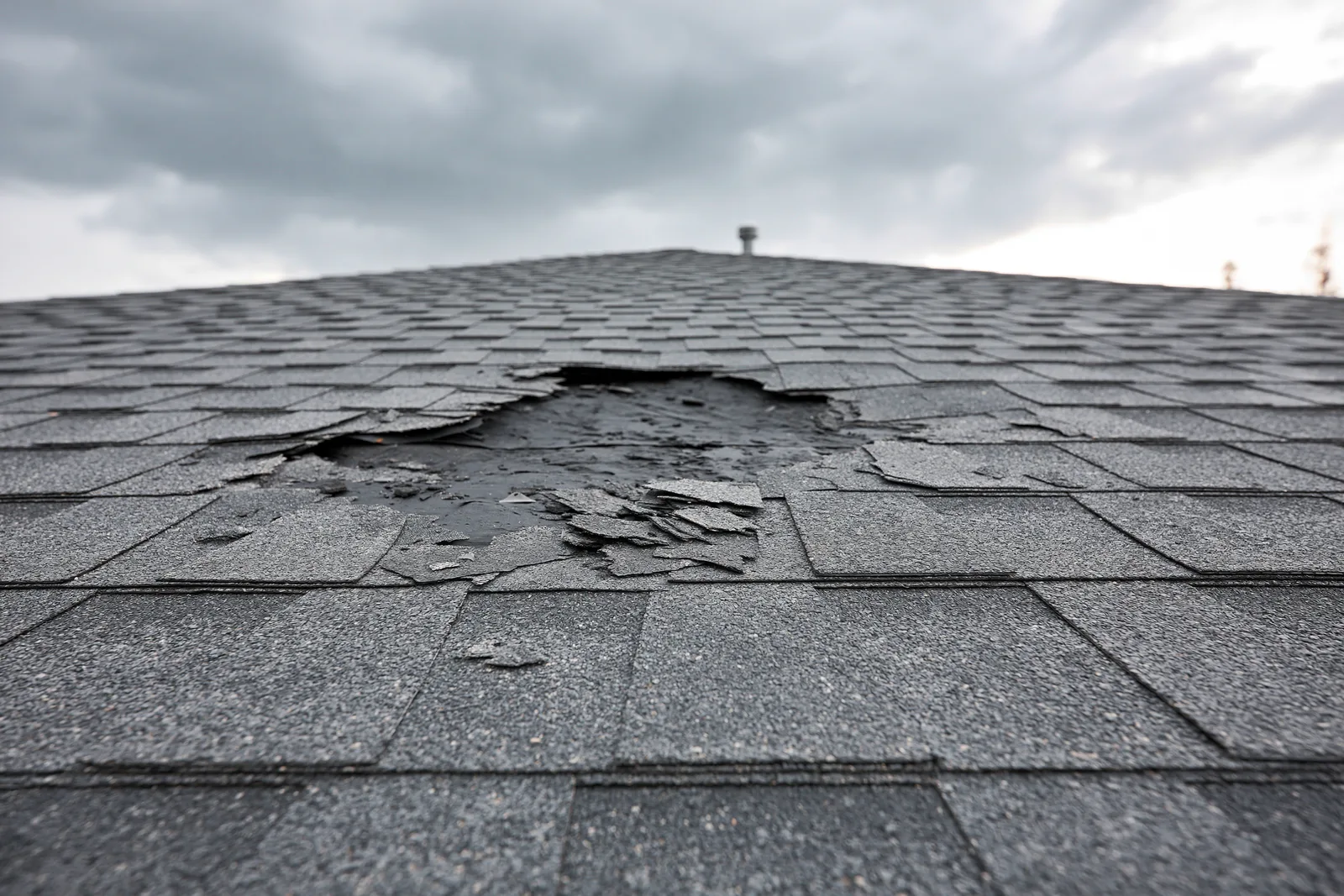
Temporary protection buys a way to manage the opening. It is not the finished roofing repair.
A temporary cover needs a usable attachment and a way to direct rain past the exposed area. The damaged roof and conditions determine whether that approach is suitable.
Permanent work removes the affected material, addresses the base and reconnects the water-shedding layers. Deck, underlayment and flashing damage can extend the repair beyond what is visible.
The roofing discussion separates the urgent concern from the complete project.
Call with the property location and say whether water is entering now. Include an observed opening or falling debris if you already know about it.
Access, weather and the roof condition determine what stabilization is practical. No unsafe homeowner roof access is needed.
The permanent scope follows the damaged layers and their connections. Interior damage and other trades remain separate parts of the recovery.
Weather, access, available arrangements and the actual condition affect timing. Explain the active concern when you call so the practical next step can be discussed.
No. Temporary covering can reduce entry while the roof work is planned, but the damaged assembly still needs a permanent repair or replacement.
Do not assume so. Harrah publishes a nonbusiness-day and emergency submission route while also requiring permits before work. The permit guide explains the current published process and the scope questions that remain.
Call and say if water is actively coming in. You can also describe the roof concern in the request form, with the property location.