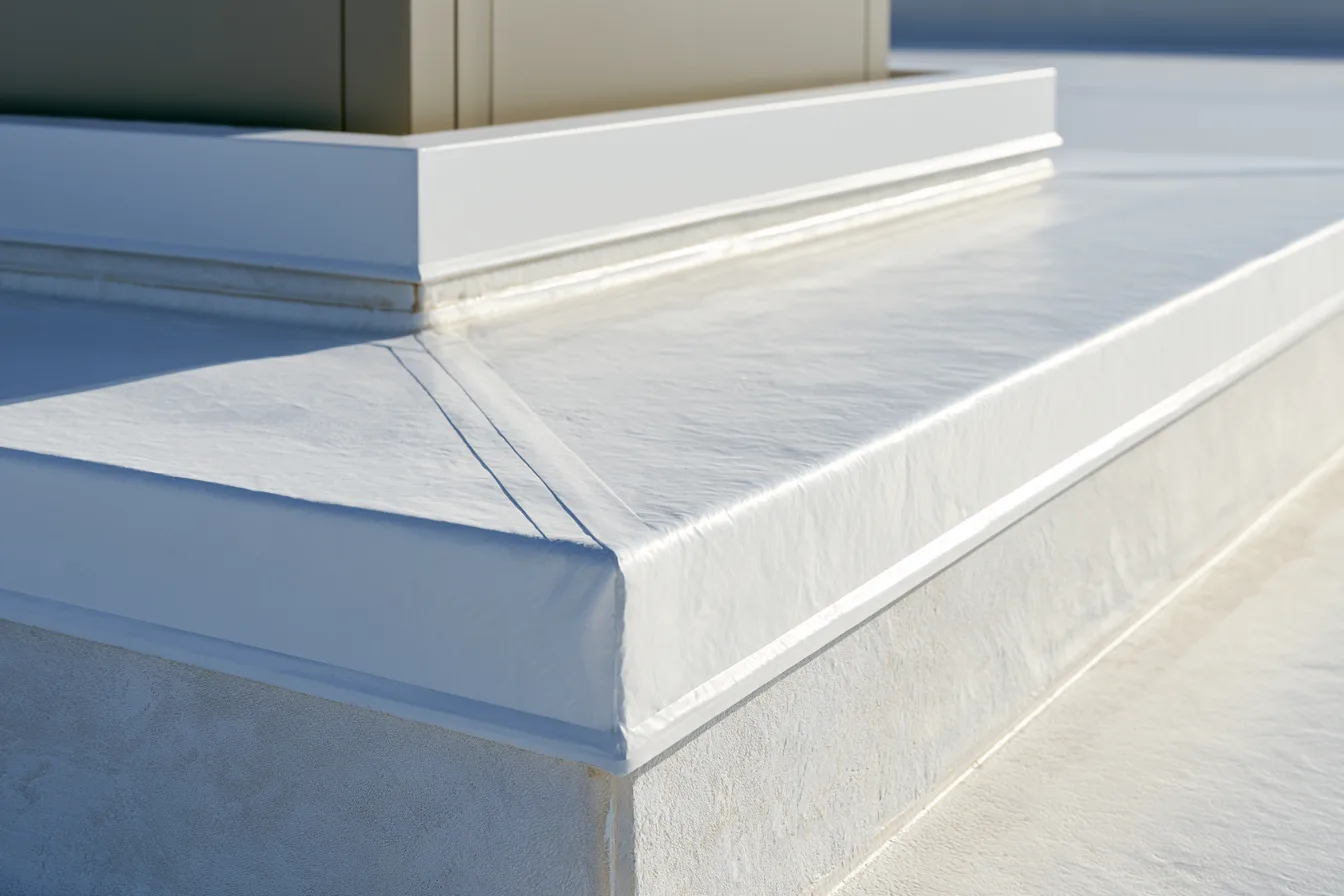
Flat roof repair
Trace leaks at seams, curbs, drains and transitions. Compatible repair materials and moisture below the membrane set the scope.
Explore this service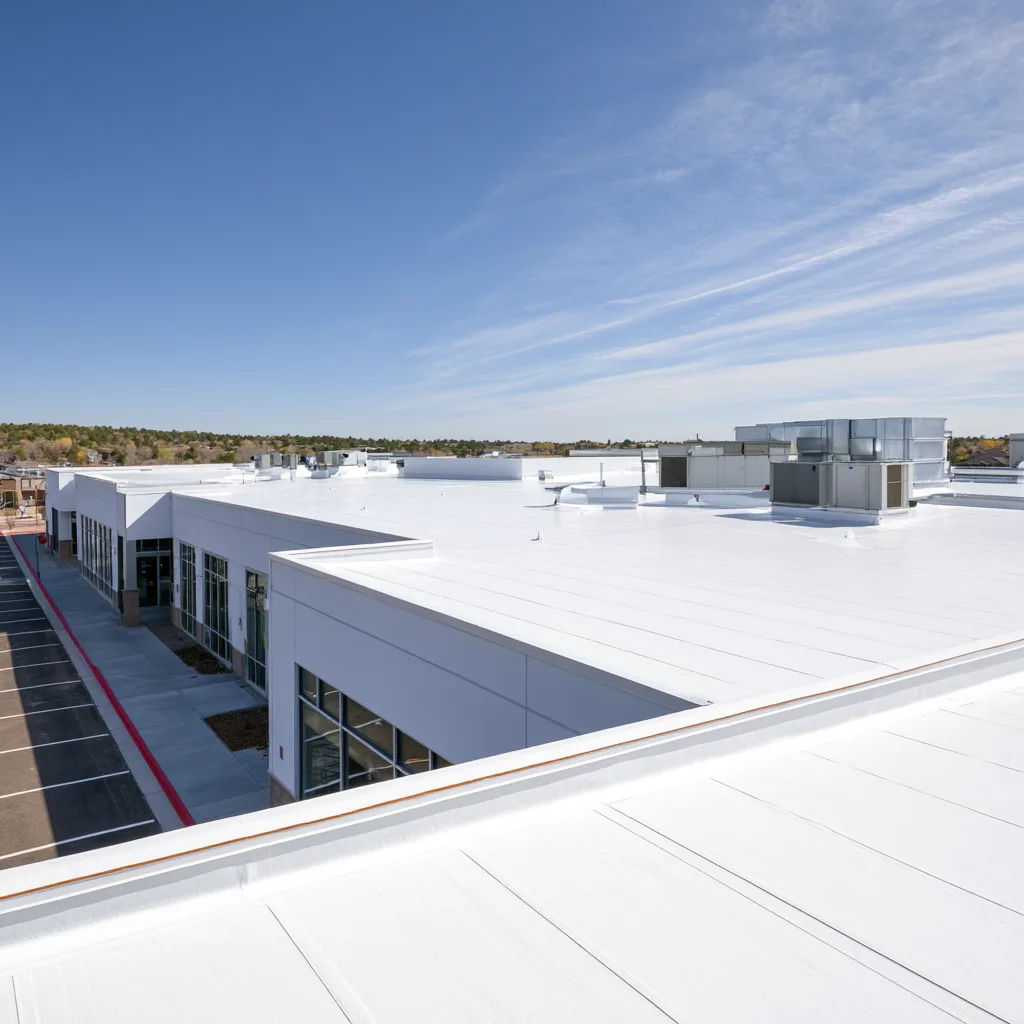
Keep the roof decision tied to the building. We help Harrah owners consider leak repair, restoration and replacement with drainage, rooftop equipment and day-to-day operations in view.
A commercial leak can start at a seam, equipment curb, drain or wall transition. Water can also move beneath the membrane before showing up in an occupied area. The assessment looks at the surface and the connected details, then considers whether moisture has affected insulation or the deck.
The present system matters. TPO, EPDM, modified bitumen and metal do not share one universal patch or restoration product. Compatible material, attachment and the condition of the layers beneath the surface determine the available choices.
For an occupied building, we also need to understand how the roof is reached, where people enter, where materials can be staged and what equipment must remain in service. That keeps the roofing proposal connected to the actual property.
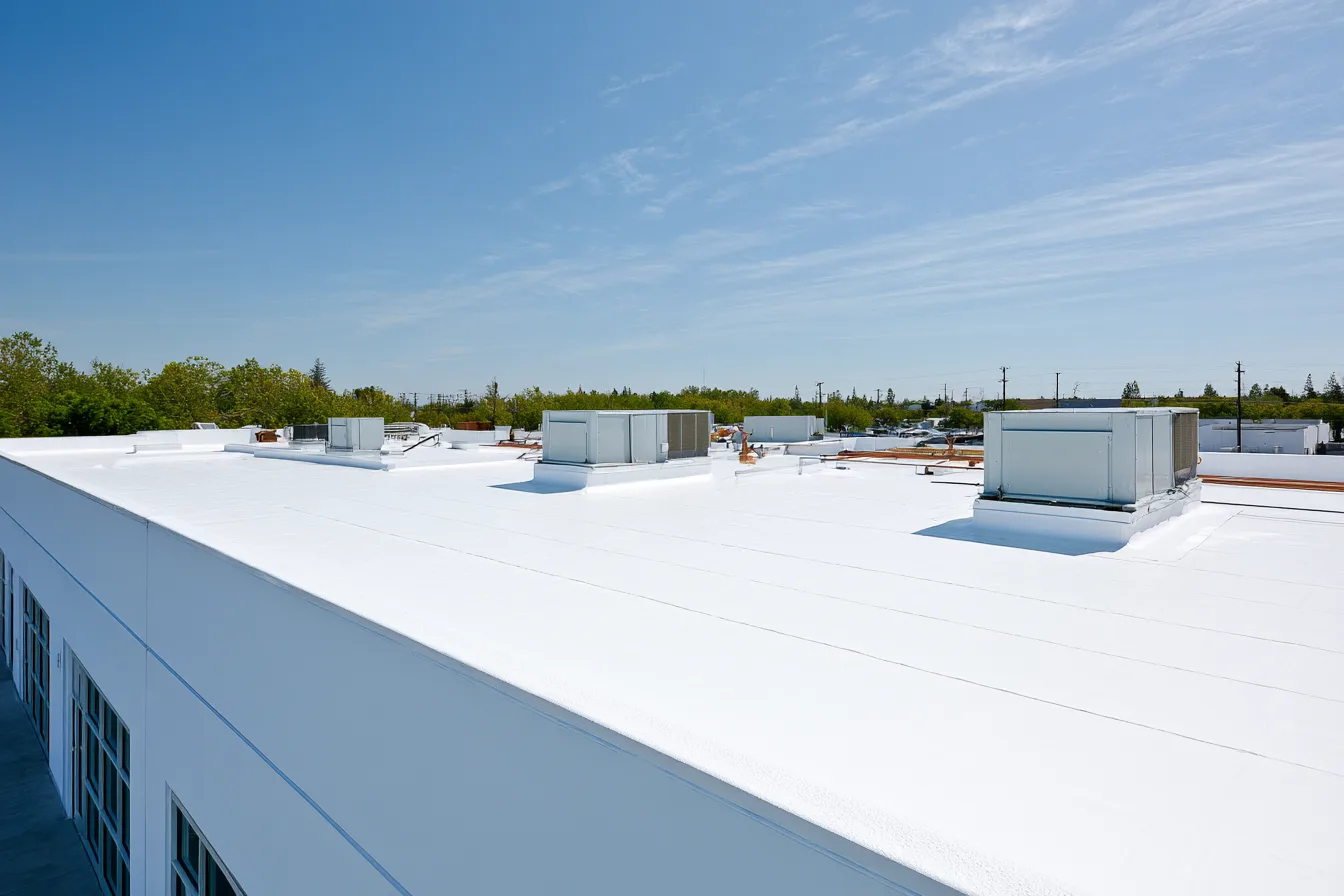
The smallest visible defect does not always mean the smallest project. The useful choice depends on how much serviceable roof remains.
| Choice | When it fits | What sets its limit |
|---|---|---|
| Focused repair | A defined defect can connect to sound, compatible material around it. | Wet insulation, deteriorated deck or defects continuing beyond the repair area can widen removal. |
| Restoration coating | A serviceable roof can accept the specified coating after repair, preparation and adhesion checks. | A coating does not dry insulation, rebuild a failed substrate or correct the roof slope. |
| Replacement | Broad deterioration, incompatible repairs or affected underlying layers call for removal and a new assembly. | The deck, drainage, equipment and attachment must be planned alongside the new membrane. |
A restoration discussion starts with roof coating eligibility; active defects have their own flat-roof repair path.
Each system page develops its own work, limits and building-owner decisions.
Trace leaks at seams, curbs, drains and transitions. Compatible repair materials and moisture below the membrane set the scope.
Explore this servicePlan the membrane, heat-welded seams, insulation and attachment as one roof assembly.
Explore this serviceRestoration begins with a serviceable roof. Preparation, moisture and adhesion decide whether a coating is a useful option.
Explore this serviceReplace deteriorated covering or wet layers with a plan for drainage, equipment and occupied-building access.
Explore this serviceRoof work needs a practical route through an operating property. These details shape the project before material reaches the roof.
Identify tenant doors, walkways, loading areas and sensitive operations beneath the work zone. Staging and falling-debris control need to fit that use.
Curbs, pipe penetrations and equipment support need roofing details. Moving or disconnecting units can involve mechanical, electrical or plumbing trades.
Work sections need a plan for water while the roof is open. Drains, scuppers and overflow paths remain part of the design rather than being covered by a fresh surface.
Service traffic, walkway protection and access to equipment affect the finished roof. The project record should identify the installed system and the terms offered by its manufacturer and contractor.
Commercial pricing follows the assembly and the building constraints. A residential asphalt rate is not a useful substitute.
Wet insulation and damaged deck require different work from a dry membrane repair. Roof height, attachment design, perimeter details, rooftop equipment and drainage changes add their own labor and material.
The investigation also distinguishes a surface problem from one involving multiple layers. Concealed conditions can change the work after opening.
Recurring repairs, access for maintenance and the future use of the building affect whether restoration or replacement is useful. A lower surface-treatment price does not make a wet or unsound roof a coating candidate.
Keep the repair, restoration and replacement alternatives tied to the same findings so the owner can understand what each choice actually resolves.
The building use, safe work zones, equipment and project scope determine the arrangement. Tenant entrances, deliveries and work areas need to be considered early so roofing work can be coordinated around them.
No. Appearance alone does not identify a membrane. System records and an on-roof assessment are needed before selecting compatible repair material.
A coating does not create missing slope or unblock a drain. Drainage and the condition beneath the surface need to be addressed as part of the restoration decision.
Keep drainage and roof access part of the building maintenance plan. Debris, equipment service and new penetrations can change the roof after installation. Any product-specific maintenance conditions belong with the installed system terms.
Tell us the building location, its use and where water or deterioration is causing concern.
Request a free commercial roof inspection and discuss the work around the building’s operations.