Local dry repair
A defined defect that connects to sound dry material can stay focused. The surrounding seams and transitions still need to be considered.
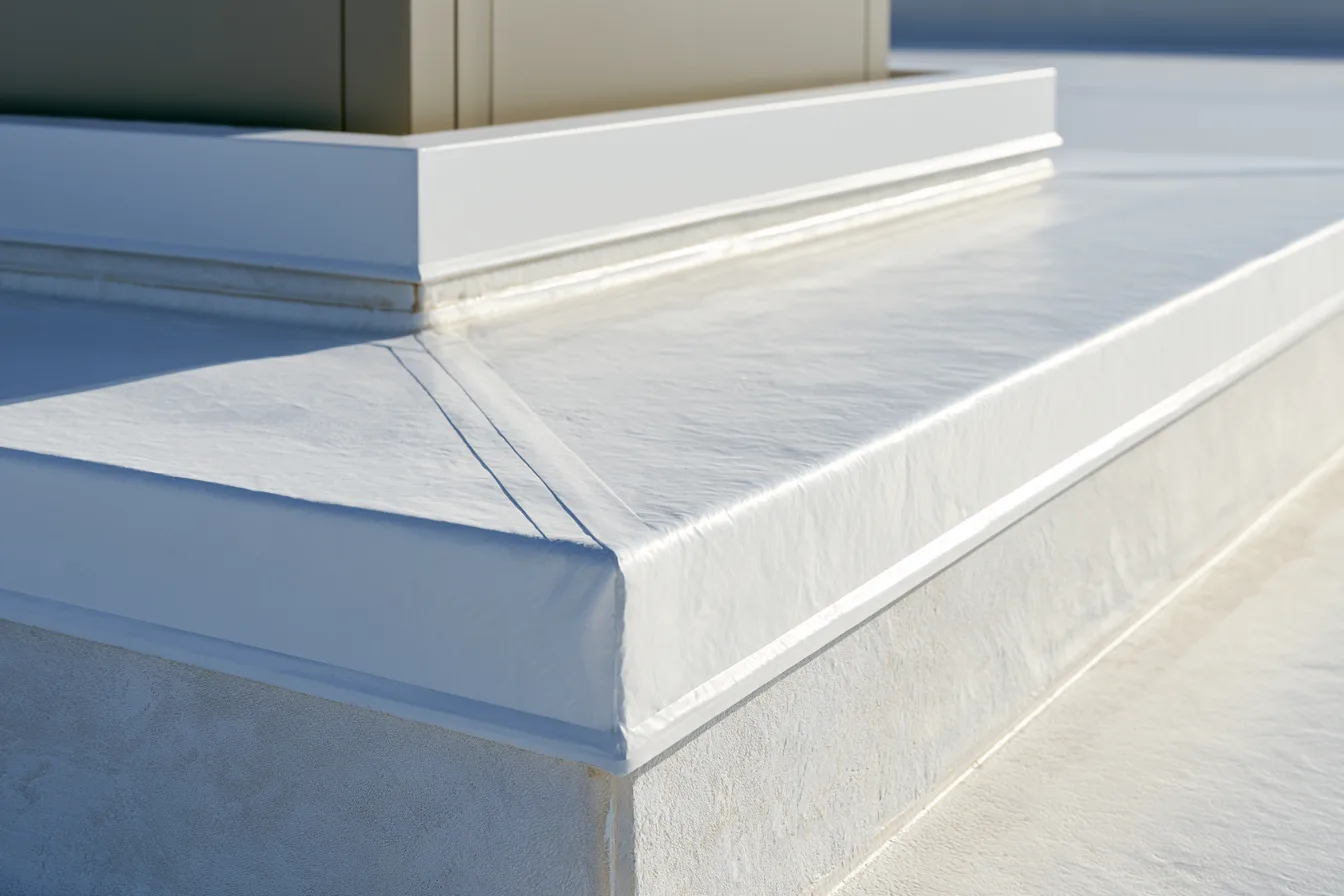
Repair commercial leaks at the roof detail that failed. The membrane type, the material around the defect and moisture below the surface determine the scope.
A low-slope leak can involve an open seam, a curb corner, a puncture or a drain transition. Water can travel beneath the membrane, so the visible indoor location is a starting point rather than a diagnosis.
The assessment considers both the field membrane and the places it meets other materials. Equipment service paths, pipe supports and drainage can change the roof after installation and deserve attention around the active concern.
A lasting repair uses material and preparation suited to the existing system. A generic surface patch can leave incompatible material or an unsound base underneath.
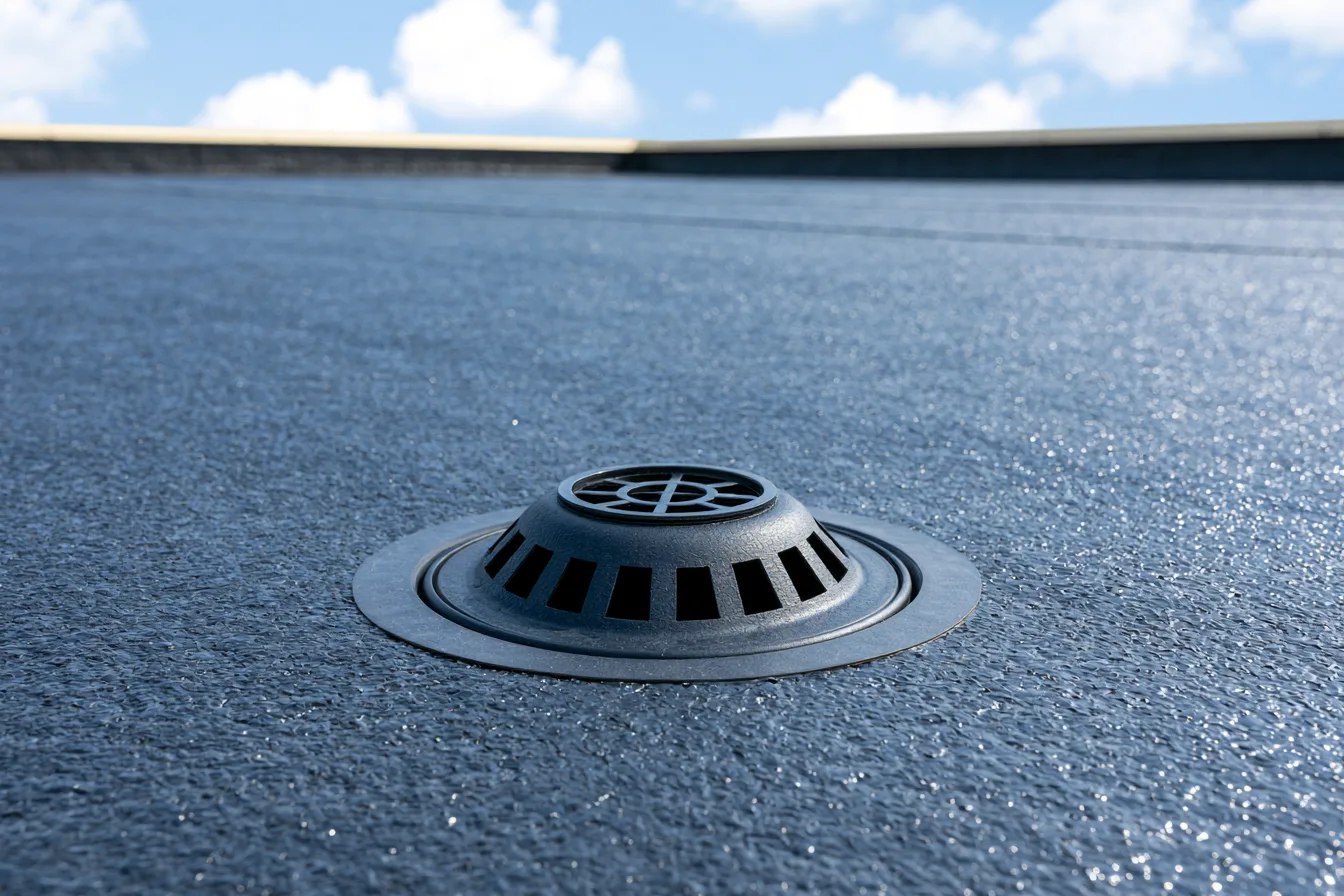
The roof identity changes the repair method.
| System | Repair consideration |
|---|---|
| TPO and other thermoplastic membranes | Heat-welded repair details require compatible membrane and suitable prepared material for the connection. |
| EPDM | Rubber membrane repairs use their specified preparation, primer and seam or patch materials. |
| Modified bitumen | The sheet construction and installation method determine compatible repair details and safe work methods. |
| Coated roofs | Existing coating type, adhesion and the underlying roof condition affect preparation and product compatibility. |
A watertight patch over wet layers can leave a building problem in place.
A defined defect that connects to sound dry material can stay focused. The surrounding seams and transitions still need to be considered.
Wet insulation loses usefulness and does not dry because a new patch covers it. Moisture extent and deck condition can require removal beyond the opening, followed by properly rebuilt layers.
The repair area needs a practical plan for the building beneath it.
Identify the leak concern, access route, equipment and occupied spaces below.
Opening a membrane requires temporary protection and a drainage plan appropriate to the work section and conditions.
Preparation, patch dimensions, seams and termination details follow the system requirements. Rooftop service traffic needs to respect the repair afterward.
Only if the repair addresses the cause. A blocked outlet, obstructed path or missing slope needs its own drainage work.
No. Restoration starts with repairs and a serviceable substrate. Active defects, wet layers and drainage problems need to be resolved first.
Access, membrane compatibility, moisture extent, deck condition, penetrations and operating constraints affect the scope and price.
Tell us the building location and where the leak is affecting operations. Request a free roof inspection.